March 13, 2016


February 09, 2016
in with a whimper, out with a whimper
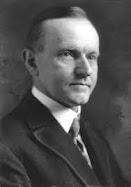
What a dud. Warren G. Harding was, in my opinion, a national mistake, elected mainly for his bone structure and neutrality. He was an undistinguished senator given his party's nomination as a compromise, and served about half a term characterized by hesitancy.
Almost from the minute he entered the White House he knew he shouldn't be there. He tried to take on a figurehead role — reveling mostly in the ceremonial duties and photo opps and leaving the governing to those he appointed. Problem is, he appointed dunderheads. Before but mostly after his death, the Secretary of Interior, Attorney General, and head of the Veteran Affairs Bureau were all investigated for corruption. He's most well known for the Teapot Dome scandal, in which Secretary Albert Fall took bribes from corporations in exchange for oil leases. WGH wasn't directly involved, but it happened under his nose because he preferred to golf rather than supervise the federal government.
It's hard to read a 600-page biography where the subject is barely admirable and surrounds himself with unremarkable people. He has a long affair, and love child, with Nan Britton, whose chief characteristic was uncomplicated availability. All his friends suck. And the biographer, Francis Russell, continues to take pot shots at Florence Harding's looks and personality the whole book. After her husband dies in California and she returns to the White House to pack up their things, Russell says that she returned to Washington, "ankles thicker than ever." Stay classy, Francis Russell.
Along the way there was some pretty good political insults from his peers, which are my favorite, but I can't even be bothered to look them up to record because this book just drains the life from me. Harding was a mediocre to poor president who was also a mediocre to poor human being, in my estimation, and I'm happy he's out of the way.
Almost from the minute he entered the White House he knew he shouldn't be there. He tried to take on a figurehead role — reveling mostly in the ceremonial duties and photo opps and leaving the governing to those he appointed. Problem is, he appointed dunderheads. Before but mostly after his death, the Secretary of Interior, Attorney General, and head of the Veteran Affairs Bureau were all investigated for corruption. He's most well known for the Teapot Dome scandal, in which Secretary Albert Fall took bribes from corporations in exchange for oil leases. WGH wasn't directly involved, but it happened under his nose because he preferred to golf rather than supervise the federal government.
It's hard to read a 600-page biography where the subject is barely admirable and surrounds himself with unremarkable people. He has a long affair, and love child, with Nan Britton, whose chief characteristic was uncomplicated availability. All his friends suck. And the biographer, Francis Russell, continues to take pot shots at Florence Harding's looks and personality the whole book. After her husband dies in California and she returns to the White House to pack up their things, Russell says that she returned to Washington, "ankles thicker than ever." Stay classy, Francis Russell.
Along the way there was some pretty good political insults from his peers, which are my favorite, but I can't even be bothered to look them up to record because this book just drains the life from me. Harding was a mediocre to poor president who was also a mediocre to poor human being, in my estimation, and I'm happy he's out of the way.
June 23, 2015
WGH: multi-tasker
Harding was a US Senator during WWI, and if you're wondering how he comported himself in such an esteemed role during a vital chapter in our nation's history, it was writing letters to his two mistresses at his desk during Senate debates.
May 07, 2015
Who is this Warren G Harding anyway?
Warren G. Harding's legacy is a mess. And I don't just mean that he's remembered as a bad president, which he is, and was, but that sorting through accounts of him, both by historians and his contemporaries, you never feel like you're getting the real story.
There are two main points on which his legacy stands, neither of which have to do with his political career. The first is the persistent rumor that his great-grandmother was black. There's no concrete evidence for or against this, and as of when Francis Russell wrote his biography (in the 1960s) the Harding family were dead set against looking into it.
The story Warren's father stuck to was that a neighbor got mad at them and started the rumor that they were mixed race. The rumor was spread widely in the Blooming Grove and Marion communities where Harding grew up and then lived, and when he was running for president someone got wind of it and publicized it nationally to hurt Harding, which is how the rumor made it into the history books.
 The story goes that the Harding family a few generations above Warren's generation were known to be black, but when the family moved to Ohio they started passing as white. People also point to Warren's father's curly hair and a few cousins' or great uncles' "negroid features." The man pictured on the book cover, left, is purportedly WGH's great-uncle. But it could just be some dude named Harding. The research that went into that book is about a solid as its cover design.
The point is, we don't know, and really it doesn't matter. What is certain, and what is consequential, is that WGH experienced racism in a very real and consistent way. Kids shouted racial slurs at him and his siblings at school, as a successful Marion businessman WGH was still barred from many of the clubs and associations he wanted to join, like the Masons, and his wife's father disowned her because she had "married a n---."
[Once WGH was a former lieutenant governor being eyed for the US Senate his father-in-law was more like oh heeeeey we're cool.]
Who's to say the effect this had on his life? He was certainly very ambitious, in the face of constant ridicule. And during his short presidency he gave a speech in Birmingham, Alabama calling for an "end of prejudice," the first president to mention civil rights in the South. [The speech was greeted with silence from the audience in front of him, and cheers from the black segregated farther away.] One could take the Tolstoyan view that it was simply time for the presidency to be for Civil Rights, but one almost must think that his lifelong experience of prejudice informed the speech.
The other thing Harding is chiefly know for is his flair for adultery. He married Florence Kling when he was 25 and she was 30, already divorced and with one son. Her father was a mean dude, and most people think she married the young, rising businessman as a way to secure a future away from him. For Warren's part, marrying Amos Kling's daughter might have given him some of the legitimacy and stability he needed to be a leading citizen in the community. It's doubtful they were ever madly in love with each other, but it seems they both knew what they were doing, and what they wanted, and ended up being a "successful" political couple, as these things go. She took over the business side of his newspaper, which immediately got out of debt, and was thought to be something of a political manager for him throughout his life.
Francis Russell, who wrote the biography I'm reading, is either a horrible misogynist or just hates Florence (or both!), because he never views their marriage with any nuance. He writes as if Florence trapped him into marriage against his will and then he was miserable forever. His reasoning: she was ugly, so duh. Here's something he wrote about their marriage about 10 years in:
"There were times enough when Harding wished that his wife were dead. Yet though he played with the idea, he could never assert himself to the point of leaving her. She was in her grim way part of him, a part he could not discard. Their dark and cluttered house represented home, with all the emotional overtones the word had for him. She, thick-ankled and withered, was no longer a sexual object, yet her illnesses distressed him. He had long been used to satisfying his physical needs elsewhere. She knew it, or at least sensed it, and was still woman enough to be torn with jealousy."
Yeah, Francis Russell can eat a bowl of butts.
But Harding did have numerous affairs, and visit numerous brothels. Most notably, he carried on a 15-year affair with Carrie Phillips, the wife of his friend and fellow Marion businessman James Phillips. The Phillipses and the Hardings were friends, and the two couples hung out a lot and went on vacation together sometimes (ewwwwww). Russell was writing his biography fairly soon after Carrie died (about 40 years after Harding) and got his hands on all the love letters from WGH she had kept. He quoted them extensively in the book, obviously, and it was set for publication when Harding's nephew filed for an injunction. The judge upheld it, but it was too late to re-write the book without the quotes, so they were simply replaced with dashes. The result is pages such as these:

It's a little funny because it seems just as damning as using the actual quotes would have been.
Anyway, the judge granted Harding's nephew a copyright to the letters, who then donated them to the Library of Congress under the condition that they would be sealed for 50 years.
Sooooo, fast forward 50 years. Harding's nephew has died and the internet has happened, and you can now read scans of the entire collection of letters on the Library of Congress's website. (Smithsonian Magazine has an article about the highlights here.) Jim Robenalt wrote a book based on the letters, The Harding Affair, and in an interview said that "ironically letters of adultery may be his salvation because they force the reader to take another look—a full look at Harding the man and Harding the statesman."
I'm not sure whether I'm getting a good look at Harding, either through Francis Russell's sexist/racist romp of a biography, or through further reading I've done on WGH, Florence, and Carrie. He seems to be an eternally unlucky man.
There are two main points on which his legacy stands, neither of which have to do with his political career. The first is the persistent rumor that his great-grandmother was black. There's no concrete evidence for or against this, and as of when Francis Russell wrote his biography (in the 1960s) the Harding family were dead set against looking into it.
The story Warren's father stuck to was that a neighbor got mad at them and started the rumor that they were mixed race. The rumor was spread widely in the Blooming Grove and Marion communities where Harding grew up and then lived, and when he was running for president someone got wind of it and publicized it nationally to hurt Harding, which is how the rumor made it into the history books.

The point is, we don't know, and really it doesn't matter. What is certain, and what is consequential, is that WGH experienced racism in a very real and consistent way. Kids shouted racial slurs at him and his siblings at school, as a successful Marion businessman WGH was still barred from many of the clubs and associations he wanted to join, like the Masons, and his wife's father disowned her because she had "married a n---."
[Once WGH was a former lieutenant governor being eyed for the US Senate his father-in-law was more like oh heeeeey we're cool.]
Who's to say the effect this had on his life? He was certainly very ambitious, in the face of constant ridicule. And during his short presidency he gave a speech in Birmingham, Alabama calling for an "end of prejudice," the first president to mention civil rights in the South. [The speech was greeted with silence from the audience in front of him, and cheers from the black segregated farther away.] One could take the Tolstoyan view that it was simply time for the presidency to be for Civil Rights, but one almost must think that his lifelong experience of prejudice informed the speech.
The other thing Harding is chiefly know for is his flair for adultery. He married Florence Kling when he was 25 and she was 30, already divorced and with one son. Her father was a mean dude, and most people think she married the young, rising businessman as a way to secure a future away from him. For Warren's part, marrying Amos Kling's daughter might have given him some of the legitimacy and stability he needed to be a leading citizen in the community. It's doubtful they were ever madly in love with each other, but it seems they both knew what they were doing, and what they wanted, and ended up being a "successful" political couple, as these things go. She took over the business side of his newspaper, which immediately got out of debt, and was thought to be something of a political manager for him throughout his life.
Francis Russell, who wrote the biography I'm reading, is either a horrible misogynist or just hates Florence (or both!), because he never views their marriage with any nuance. He writes as if Florence trapped him into marriage against his will and then he was miserable forever. His reasoning: she was ugly, so duh. Here's something he wrote about their marriage about 10 years in:
"There were times enough when Harding wished that his wife were dead. Yet though he played with the idea, he could never assert himself to the point of leaving her. She was in her grim way part of him, a part he could not discard. Their dark and cluttered house represented home, with all the emotional overtones the word had for him. She, thick-ankled and withered, was no longer a sexual object, yet her illnesses distressed him. He had long been used to satisfying his physical needs elsewhere. She knew it, or at least sensed it, and was still woman enough to be torn with jealousy."
Yeah, Francis Russell can eat a bowl of butts.
But Harding did have numerous affairs, and visit numerous brothels. Most notably, he carried on a 15-year affair with Carrie Phillips, the wife of his friend and fellow Marion businessman James Phillips. The Phillipses and the Hardings were friends, and the two couples hung out a lot and went on vacation together sometimes (ewwwwww). Russell was writing his biography fairly soon after Carrie died (about 40 years after Harding) and got his hands on all the love letters from WGH she had kept. He quoted them extensively in the book, obviously, and it was set for publication when Harding's nephew filed for an injunction. The judge upheld it, but it was too late to re-write the book without the quotes, so they were simply replaced with dashes. The result is pages such as these:

It's a little funny because it seems just as damning as using the actual quotes would have been.
Anyway, the judge granted Harding's nephew a copyright to the letters, who then donated them to the Library of Congress under the condition that they would be sealed for 50 years.
Sooooo, fast forward 50 years. Harding's nephew has died and the internet has happened, and you can now read scans of the entire collection of letters on the Library of Congress's website. (Smithsonian Magazine has an article about the highlights here.) Jim Robenalt wrote a book based on the letters, The Harding Affair, and in an interview said that "ironically letters of adultery may be his salvation because they force the reader to take another look—a full look at Harding the man and Harding the statesman."
I'm not sure whether I'm getting a good look at Harding, either through Francis Russell's sexist/racist romp of a biography, or through further reading I've done on WGH, Florence, and Carrie. He seems to be an eternally unlucky man.
April 19, 2015
presidential fact #31: a flaky president
A handful of times throughout his life, Winnie Harding went to spend some me time at Battle Creek Sanitarium in Michigan.
Battle Creek Sanitarium was run by the Kellogg brothers, one of whom invented Corn Flakes as something to feed the patients. I quite recommend the episode of Drunk History that tells the story.
Battle Creek Sanitarium was run by the Kellogg brothers, one of whom invented Corn Flakes as something to feed the patients. I quite recommend the episode of Drunk History that tells the story.
April 13, 2015
presidential fact #30
When Warren G. Harding's father, George, was a Union soldier, he visited the White House and shook Lincoln's hand.
(Warren G. Harding was the first president born after the Civil War.)
(Warren G. Harding was the first president born after the Civil War.)
April 06, 2015
you probably think this national anthem's about you, don't you?
I've had just about enough of these presidents and their secret diseases! Divulge your debilitating health problems, you megalomaniacs! This isn't tsarist Russia!
When Wilson returned from Paris in the spring or summer of 1919, he faced an uphill battle both politically and physically. The peace process had exhausted him, and his doctor was begging him to take some time off, but he returned to find that Henry Cabot Lodge (who is just ONE OF THOSE SENATORS) was determined that Congress not ratify the Treaty of Versailles.
While Lodge worked the votes in Congress, Wilson decided to go on a whistlestop tour of the US to rally support for the Treaty and the League of Nations from the people themselves, whose support he had lost during his months abroad. His doctor, Grayson, begged him not to do this. He'd been having what Grayson called "cerebral episodes" with increasing frequency, and going on a grueling train trip in the middle of the summer with stops to give long speeches, seemed like a recipe for disaster. Wilson couldn't be dissuaded, and basically told Grayson that he was willing to kill himself for the League.
The trip was cut short when Wilson collapsed after a speech in Pueblo, Colorado, and Wilson rushed backed to Washington to rest. In October of 1919 Wilson had a serious stroke, and was bedridden for months. He didn't leave the White House grounds for something like six months. He didn't speak to any of his Cabinet until February. He saw almost nobody besides his wife, Grayson, White House usher Ike Hoover, a nurse, and various White House staff. But absolutely no government officials.
During this time, his wife Edith acted as his gatekeeper, taking messages for him and deciding which of them he needed to know about (very few). The country was informed that the president was sick and needed to rest, but nobody knew exactly how serious it was. The Cabinet kept meeting without him, which made Wilson mad, to which they responded SOMEONE NEEDS TO RUN THE COUNTRY, DUDE.
Throughout this time, Wilson would occasionally toy with the idea of ceding power to his vice president, a nice dude from Indiana from Marshall. But he and his doctor decided that he was able to "adequately perform" his duties as president, a decision he made based on the very limited view of what was going on in the government he got from Edith. Because Edith only told him about the issues he could easily handle from his bed, he assumed that he was easily handling the presidency. He was not. Federal appointments stayed open for months, new ambassadors couldn't start their jobs because Wilson couldn't accept their credentials, and the secretary of the interior hired a young guy named J. Edgar Hoover, who started wantonly deporting Russians on suspicion of communism.
Wilson was a great man, and the fact that his body failed him at the most crucial moment of his presidency is truly a tragedy, but it makes me mad when the presidents do this. I've talked about the presidential gaze before, how entering the office gives you a higher level of perspective, but I also think it convinces these dudes that they are innately, divinely presidential. Wilson convinced himself that even in a drastically debilitated state, he needed to be the president.
Then he swung from telling Grayson he was going to cede power to Marshall, to saying that he was going to run for a third term, in case you needed to know how much denial he was in.
The Democrats got slaughtered in the midterms, and Wilson regained just enough strength by mid-1920 to be what biographer Berg called "the lamest of all lame ducks in American history," which is a Wilson-can't-walk-without-a-cane joke. Although Edith and Wilson maintained that his mind remained sharp for the duration of his presiency, Grayson and Ike Hoover both later admitted that he was never himself after Pueblo.
The best thing to happen to Wilson at the end of his life was that his successor, Harding, was a bona fide disaster, so public opinion rushed back to him almost immediately. By the time he died in 1924, he was the most popular man in America again.
When Wilson returned from Paris in the spring or summer of 1919, he faced an uphill battle both politically and physically. The peace process had exhausted him, and his doctor was begging him to take some time off, but he returned to find that Henry Cabot Lodge (who is just ONE OF THOSE SENATORS) was determined that Congress not ratify the Treaty of Versailles.
While Lodge worked the votes in Congress, Wilson decided to go on a whistlestop tour of the US to rally support for the Treaty and the League of Nations from the people themselves, whose support he had lost during his months abroad. His doctor, Grayson, begged him not to do this. He'd been having what Grayson called "cerebral episodes" with increasing frequency, and going on a grueling train trip in the middle of the summer with stops to give long speeches, seemed like a recipe for disaster. Wilson couldn't be dissuaded, and basically told Grayson that he was willing to kill himself for the League.
The trip was cut short when Wilson collapsed after a speech in Pueblo, Colorado, and Wilson rushed backed to Washington to rest. In October of 1919 Wilson had a serious stroke, and was bedridden for months. He didn't leave the White House grounds for something like six months. He didn't speak to any of his Cabinet until February. He saw almost nobody besides his wife, Grayson, White House usher Ike Hoover, a nurse, and various White House staff. But absolutely no government officials.
During this time, his wife Edith acted as his gatekeeper, taking messages for him and deciding which of them he needed to know about (very few). The country was informed that the president was sick and needed to rest, but nobody knew exactly how serious it was. The Cabinet kept meeting without him, which made Wilson mad, to which they responded SOMEONE NEEDS TO RUN THE COUNTRY, DUDE.
Throughout this time, Wilson would occasionally toy with the idea of ceding power to his vice president, a nice dude from Indiana from Marshall. But he and his doctor decided that he was able to "adequately perform" his duties as president, a decision he made based on the very limited view of what was going on in the government he got from Edith. Because Edith only told him about the issues he could easily handle from his bed, he assumed that he was easily handling the presidency. He was not. Federal appointments stayed open for months, new ambassadors couldn't start their jobs because Wilson couldn't accept their credentials, and the secretary of the interior hired a young guy named J. Edgar Hoover, who started wantonly deporting Russians on suspicion of communism.
Wilson was a great man, and the fact that his body failed him at the most crucial moment of his presidency is truly a tragedy, but it makes me mad when the presidents do this. I've talked about the presidential gaze before, how entering the office gives you a higher level of perspective, but I also think it convinces these dudes that they are innately, divinely presidential. Wilson convinced himself that even in a drastically debilitated state, he needed to be the president.
Then he swung from telling Grayson he was going to cede power to Marshall, to saying that he was going to run for a third term, in case you needed to know how much denial he was in.
The Democrats got slaughtered in the midterms, and Wilson regained just enough strength by mid-1920 to be what biographer Berg called "the lamest of all lame ducks in American history," which is a Wilson-can't-walk-without-a-cane joke. Although Edith and Wilson maintained that his mind remained sharp for the duration of his presiency, Grayson and Ike Hoover both later admitted that he was never himself after Pueblo.
The best thing to happen to Wilson at the end of his life was that his successor, Harding, was a bona fide disaster, so public opinion rushed back to him almost immediately. By the time he died in 1924, he was the most popular man in America again.
April 05, 2015
presidential fact #29


April 02, 2015
devastated
Woodrow Wilson had a surprisingly interesting first term, considering that no one ever talks about it. His second term, which saw him enter WWI and then work towards the Treaty of Versailles and the League of Nations, is what we know him for. But in his first term he passed an impressive amount of reform legislation, codifying the transition to a world power and first world economy that Roosevelt and Taft had been talking about for years. Not at all bad for someone who became president after only a few years as governor of New Jersey, and whose main campaign strategy was to let Roosevelt and Taft tear each other apart.
Every president hits their peak, the zenith of a large, historic life. The lucky ones hit it after they're done being president (Quincy Adams), the unfortunate hit it before their presidency (Grant), but most of them hit it somewhere right in the middle (Wilson).
Wilson is rare in that you can point at the exact moment his presidency peaked — his "make the world safe for democracy' speech. That speech really killed, globally. And he rode its goodwill through the war, and then everything started falling apart.
Wilson's decision to spend the better part of a year in Paris for the peace process was and is still hotly debated and criticized. It didn't seem to make anybody happy. Americans felt abandoned and Europeans felt condescended to. The delegations from France, Italy, and Great Britain couldn't stomach that America had sacrificed the least in the war and yet were trying to run the peace process. France, in particular, was mad that Wilson wouldn't go on a tour of her devastated lands, to see what the war had done to them. Wilson's response:
Isn't he something?
He might actually have been going loony mad though. He had history of high blood pressure and migraines, and would go on to have a serious strokes, and some people who have examined his medical history and symptoms in retrospect believe he started having a series of mini-strokes during the peace process. He would at times be absent-minded and paranoid, at other times giddy and childlike, and became obsessed with rearranging furniture. It's possible these are all the effects of an extremely high-pressure situation, but many believe (and biographer Berg seems to have thrown his hat in with this theory) that he was experiencing neurological damage from strokes or early onset dementia.
His increasing inflexible and irascible behavior made the peace process more difficult, but he did get through it. Unfortunately, the downward slide had already begun.
Every president hits their peak, the zenith of a large, historic life. The lucky ones hit it after they're done being president (Quincy Adams), the unfortunate hit it before their presidency (Grant), but most of them hit it somewhere right in the middle (Wilson).
Wilson is rare in that you can point at the exact moment his presidency peaked — his "make the world safe for democracy' speech. That speech really killed, globally. And he rode its goodwill through the war, and then everything started falling apart.
Wilson's decision to spend the better part of a year in Paris for the peace process was and is still hotly debated and criticized. It didn't seem to make anybody happy. Americans felt abandoned and Europeans felt condescended to. The delegations from France, Italy, and Great Britain couldn't stomach that America had sacrificed the least in the war and yet were trying to run the peace process. France, in particular, was mad that Wilson wouldn't go on a tour of her devastated lands, to see what the war had done to them. Wilson's response:
"I don't want to see the devastated regions. As a boy, I saw the country through which Sherman marched to the sea. The pathway lay right through my people's properties. I know what happened, and I know the bitterness and hatreds which were engendered. I don't want to get mad over here because I think there ought to be one person at that peace table who isn't mad. I'm afraid if I visited the devastated areas I would get mad, too, and I'm not going to permit myself to do so."
Isn't he something?
He might actually have been going loony mad though. He had history of high blood pressure and migraines, and would go on to have a serious strokes, and some people who have examined his medical history and symptoms in retrospect believe he started having a series of mini-strokes during the peace process. He would at times be absent-minded and paranoid, at other times giddy and childlike, and became obsessed with rearranging furniture. It's possible these are all the effects of an extremely high-pressure situation, but many believe (and biographer Berg seems to have thrown his hat in with this theory) that he was experiencing neurological damage from strokes or early onset dementia.
His increasing inflexible and irascible behavior made the peace process more difficult, but he did get through it. Unfortunately, the downward slide had already begun.
January 04, 2015
presidential fact #28
The first White House press conference was held by the newly-elected Wilson in the Oval Office on March 15, 1913.
November 04, 2014
Woodrow Wilson and the Seven Sisters
After attending Princeton, which he lo-o-o-o-o-oved, Tommy W. Wilson started his graduate work at the University of Virginia, where he formally shed his first name and started going by Woodrow. After only a year he moved back to Georgia to practice law, which he didn't enjoy. We've entered a period of Wilson's life where he doesn't enjoy anything, because he sees himself as bound for greatness and chafes at having to pay his dues in any capacity. (This is a common phase for many future presidents — JQA spent a decade or so in a similar huff — that would be more ingratiating if they weren't eventually proven right.)
After a few years of law Wilson enrolled at Johns Hopkins to pursue a doctorate. Although he loved campus life —especially being in charge of as many student activities as possible — he was less focused on scholarship than he was on his new girlfriend, whom he would marry in 1885.
He still had a year left on his doctorate but, as a newlywed, he felt pressed to provide for his wife, and took a professorial job at the newly founded Bryn Mawr, an all-women's college.
As a graduate of Wellesley (go Blue!), I was excited to find a president who had worked at one of the Seven Sisters, until I realized that Wilson was a big pill about it.
He considered a women's college beneath him and reportedly phoned in most of his lectures, sometimes just reading aloud from magazine articles he had written. However, having not officially finished his doctorate he couldn't be picky. Luckily, his books and articles were garnering him a reputation as a historian, and Johns Hopkins was inclined to let him finish his doctorate in absentia. Once he had done that, new job offers from "real" colleges came pouring in. He had signed a contract with Bryan Mawr, but it stated that he would be given an assistant "when practical." Because he hadn't been given one as soon as he expected, he claimed breach of contract and left to teach at Wesleyan, and then a few years later at Princeton.
Not a shining moment for Woodrow Wilson. A plaque at Bryn Mawr commemorating his time there was casually removed about 10 years ago.
After a few years of law Wilson enrolled at Johns Hopkins to pursue a doctorate. Although he loved campus life —especially being in charge of as many student activities as possible — he was less focused on scholarship than he was on his new girlfriend, whom he would marry in 1885.
He still had a year left on his doctorate but, as a newlywed, he felt pressed to provide for his wife, and took a professorial job at the newly founded Bryn Mawr, an all-women's college.
As a graduate of Wellesley (go Blue!), I was excited to find a president who had worked at one of the Seven Sisters, until I realized that Wilson was a big pill about it.
 |
| Woodrow Wilson with Bryn Mawr's first graduating class, 1886. (top row, far right) |
Not a shining moment for Woodrow Wilson. A plaque at Bryn Mawr commemorating his time there was casually removed about 10 years ago.
October 28, 2014
our first Confederate president
Woodrow Wilson's first memory is standing in his front yard in Augusta, Georgia in 1860, at the age of 3, and hearing someone passing say that Abraham Lincoln had won the election and that war was coming. He ran inside to ask his parents who Abraham Lincoln was, and what war was.
Although Augusta was spared the destruction of many of the neighboring Georgia towns (a reprieve rumored to result from the fact that an ex-girlfriend of General Sherman lived in Augusta), the fact remains that Wilson grew up in the war-ravaged Deep South. (During the war his father, a Presbyterian minister, left to serve as a chaplain for soldiers in North Carolina.) A few years later, he would again stand outside and watch Jefferson Davis being marched through town under federal guard.
Every president from Lincoln to McKinley served in the Civil War. (All of them as soldiers except Arthur, who was a quartermaster, because of course he was.) Roosevelt and Taft were young during the Civil War but were fairly removed from it, but Wilson really lived it, and as a Southerner! It's fascinating to me that there's a US president who at one point, by many's accounting, was a citizen of the Confederate States of America.
There hadn't been a Southern president since Andrew Johnson 50 years before, and he was a grade A fiasco. But America hadn't actually elected a Southern president since Zachary Taylor in 1849! And he slid in by winning a war.
This fascinates me — partially because I had no idea Wilson was from the South, and because I'm interested to see how growing up in a marginalized region of the country at its lowest point affects his political life (of course, by the time he reached the presidency he'd lived most of his adult life in New Jersey). A. Scott Berg is clearly setting it up to be a founding principle.
And while I'm at it, it is a straight up pleasure to be in the hands of the inimitable A. Scott Berg for this biography. I wish he'd written all the biographies.
Although Augusta was spared the destruction of many of the neighboring Georgia towns (a reprieve rumored to result from the fact that an ex-girlfriend of General Sherman lived in Augusta), the fact remains that Wilson grew up in the war-ravaged Deep South. (During the war his father, a Presbyterian minister, left to serve as a chaplain for soldiers in North Carolina.) A few years later, he would again stand outside and watch Jefferson Davis being marched through town under federal guard.
Every president from Lincoln to McKinley served in the Civil War. (All of them as soldiers except Arthur, who was a quartermaster, because of course he was.) Roosevelt and Taft were young during the Civil War but were fairly removed from it, but Wilson really lived it, and as a Southerner! It's fascinating to me that there's a US president who at one point, by many's accounting, was a citizen of the Confederate States of America.
There hadn't been a Southern president since Andrew Johnson 50 years before, and he was a grade A fiasco. But America hadn't actually elected a Southern president since Zachary Taylor in 1849! And he slid in by winning a war.
This fascinates me — partially because I had no idea Wilson was from the South, and because I'm interested to see how growing up in a marginalized region of the country at its lowest point affects his political life (of course, by the time he reached the presidency he'd lived most of his adult life in New Jersey). A. Scott Berg is clearly setting it up to be a founding principle.
And while I'm at it, it is a straight up pleasure to be in the hands of the inimitable A. Scott Berg for this biography. I wish he'd written all the biographies.
October 25, 2014
October 14, 2014
to whom it may concern
When Harding got elected, he intimated to Taft that if a spot on the Supreme Court came open, he would give it to him. I can't imagine the effect this would have had on him — in his mid-60s, after a lifetime of dizzying ups and downs, hearing that his dream may finally come true.
When the chief justice chair did open up, Taft did his best to keep his composure. His friends were more than willing to lobby on his behalf, but he sent them pretty detailed and fervent instructions about how to do so.
He was worried that his age (63) might be a hindrance. But, he wrote to his friend Gus Karger, in what is the either the sweetest or most desperate cover letter ever written: "I have had federal judicial experience, too. I. Three years on the state bench. 2. Two years solicitor general, U.S. 3. Eight years presiding judge, U.S. Circuit. 4. Four years Court of Appeals, Sixth Circuit. 5. Four years secretary of war. 6. Four years president. 7. Eight years Kent professor, Yale University, five hours a week Federal Constitutional Law except one year Chairman National War Labor Board and one year arbitrator in case between Canadian government and Grand Trunk Railway. That would seem to indicate pretty continuous service in the line of judicial and other duties preparing one for service on the Supreme Court."
Oh Taft, you darling man.
He was an incredibly modest and good-hearted man, which is what I think allowed him to bounce back from a failed presidency so easily. Because he had never had a huge ego, there wasn't much of one to deflate. His presidency, the unhappiest time of his life, soon enough faded to an item on a long list of accomplishments.
He was named chief justice in June 1921, served tirelessly until February 1930, and died one month later.
When the chief justice chair did open up, Taft did his best to keep his composure. His friends were more than willing to lobby on his behalf, but he sent them pretty detailed and fervent instructions about how to do so.
He was worried that his age (63) might be a hindrance. But, he wrote to his friend Gus Karger, in what is the either the sweetest or most desperate cover letter ever written: "I have had federal judicial experience, too. I. Three years on the state bench. 2. Two years solicitor general, U.S. 3. Eight years presiding judge, U.S. Circuit. 4. Four years Court of Appeals, Sixth Circuit. 5. Four years secretary of war. 6. Four years president. 7. Eight years Kent professor, Yale University, five hours a week Federal Constitutional Law except one year Chairman National War Labor Board and one year arbitrator in case between Canadian government and Grand Trunk Railway. That would seem to indicate pretty continuous service in the line of judicial and other duties preparing one for service on the Supreme Court."
Oh Taft, you darling man.
He was an incredibly modest and good-hearted man, which is what I think allowed him to bounce back from a failed presidency so easily. Because he had never had a huge ego, there wasn't much of one to deflate. His presidency, the unhappiest time of his life, soon enough faded to an item on a long list of accomplishments.
He was named chief justice in June 1921, served tirelessly until February 1930, and died one month later.
October 06, 2014
which of us will be the happiest
A presidential tradition — one which I would watch out for and catalog if I could start ATD over again — is the moment when an exhausted outgoing president congratulates his successor and is basically like "Here's the White House, knock yourself out lol."
Presidents love being done being president, and there have been some real zingers over the years as they pass on the mantle.
At John Adams' inauguration, he said he thought he could see George Washington thinking: "I am fairly out, and you are fairly in. See which of us will be the happiest." [Note: GW did not actually say this, don't be fooled by HBO.]
But of all the presidents who click their heels with glee on the way out the door, Taft has to be up there with Buchanan, Arthur, and Tyler. He didn't even want a second term, he really only campaigned to make sure Roosevelt didn't get re-elected.
By late 1911, it was patently clear that TR wanted to run for president again. I throw a lot of shade at TR, but his situation was also pitiable. He became president at the age of 42 and served for seven and a half years. At 50, he had more energy and ambition than the rest of the federal government put together, but found himself essentially in retirement. So naturally he went bananas. He couldn't bear not being at the center of things, in power, so he decided he should be president again.
But a lot of revisionism and self-justification had to happen so he could convince himself it was the right thing to do. He had to convince himself that Taft was ruining the country, that the Republican party that he had helped strengthen was going to the dogs, and that he himself was basically a socialist.
Above all he loved a high horse — literally and figuratively. A speech at the 1912 convention ended with the words: "We fight in honorable fashion for the good of mankind; fearless of the future; unheeding of our individual fates; with unflinching hearts and undimmed eyes; we stand at Armageddon, and we battle for the Lord."
Henry F. Pringle (another real champion at presidential biography insults) replies: "It was magnificent. It was epic, even if nobody knew where Armageddon was, exactly, and why the Lord had suddenly become an opponent of William Howard Taft."
Despite popular support, the Republican convention of 1912 insisted on Taft as their candidate, kind of because all the delegates were like "Guys? I know Teddy is popular and all but it seems like he's spinning himself into an egomaniacal frenzy?" (Wilson called it his "insane distemper of egotism.")
And he was. Incensed at not getting the nomination, he ran as a third-party candidate under his platform of New Nationalism, forcing himself farther to the left than any serious presidential candidate had ever gone in order to distinguish himself from his old party. Then he got down to the business of smearing his former friend Bill for a few solid months.
Taft, to recap, did not want to serve a second term, and did not want to get into a public fight with TR, but, in order to keep the crazed socialist moose out of the White House, was forced to do both. After a day of campaigning, during which he'd given many speeches defending himself from TR's accusations and throwing back new ones, Taft was scheduled for an interview with newspaperman Louis Seibold. When Seibold got to his train car, Taft simply said, "He was my closest friend," and started to weep.
America chose Woodrow Wilson, TR got to move on to his next flight of fancy, and the Taft presidency came to a close to everyone's satisfaction.
Unless Pringle's biography is leading me astray, I've never seen a failed president become a beloved private citizen so quickly. Upon leaving office, Taft immediately took up a professorship at Yale, which he used as a headquarters for his new role as America's friendly uncle. He was in demand as a speaker and writer, gave lots of good-natured speeches that made the country fall back in love with him, and — hoping to take the opposite tack of his predecessor — was publicly very supportive of Wilson.
And things were just going to get better.
Presidents love being done being president, and there have been some real zingers over the years as they pass on the mantle.
At John Adams' inauguration, he said he thought he could see George Washington thinking: "I am fairly out, and you are fairly in. See which of us will be the happiest." [Note: GW did not actually say this, don't be fooled by HBO.]
But of all the presidents who click their heels with glee on the way out the door, Taft has to be up there with Buchanan, Arthur, and Tyler. He didn't even want a second term, he really only campaigned to make sure Roosevelt didn't get re-elected.
By late 1911, it was patently clear that TR wanted to run for president again. I throw a lot of shade at TR, but his situation was also pitiable. He became president at the age of 42 and served for seven and a half years. At 50, he had more energy and ambition than the rest of the federal government put together, but found himself essentially in retirement. So naturally he went bananas. He couldn't bear not being at the center of things, in power, so he decided he should be president again.
But a lot of revisionism and self-justification had to happen so he could convince himself it was the right thing to do. He had to convince himself that Taft was ruining the country, that the Republican party that he had helped strengthen was going to the dogs, and that he himself was basically a socialist.
Above all he loved a high horse — literally and figuratively. A speech at the 1912 convention ended with the words: "We fight in honorable fashion for the good of mankind; fearless of the future; unheeding of our individual fates; with unflinching hearts and undimmed eyes; we stand at Armageddon, and we battle for the Lord."
Henry F. Pringle (another real champion at presidential biography insults) replies: "It was magnificent. It was epic, even if nobody knew where Armageddon was, exactly, and why the Lord had suddenly become an opponent of William Howard Taft."
Despite popular support, the Republican convention of 1912 insisted on Taft as their candidate, kind of because all the delegates were like "Guys? I know Teddy is popular and all but it seems like he's spinning himself into an egomaniacal frenzy?" (Wilson called it his "insane distemper of egotism.")
And he was. Incensed at not getting the nomination, he ran as a third-party candidate under his platform of New Nationalism, forcing himself farther to the left than any serious presidential candidate had ever gone in order to distinguish himself from his old party. Then he got down to the business of smearing his former friend Bill for a few solid months.
Taft, to recap, did not want to serve a second term, and did not want to get into a public fight with TR, but, in order to keep the crazed socialist moose out of the White House, was forced to do both. After a day of campaigning, during which he'd given many speeches defending himself from TR's accusations and throwing back new ones, Taft was scheduled for an interview with newspaperman Louis Seibold. When Seibold got to his train car, Taft simply said, "He was my closest friend," and started to weep.
America chose Woodrow Wilson, TR got to move on to his next flight of fancy, and the Taft presidency came to a close to everyone's satisfaction.
Unless Pringle's biography is leading me astray, I've never seen a failed president become a beloved private citizen so quickly. Upon leaving office, Taft immediately took up a professorship at Yale, which he used as a headquarters for his new role as America's friendly uncle. He was in demand as a speaker and writer, gave lots of good-natured speeches that made the country fall back in love with him, and — hoping to take the opposite tack of his predecessor — was publicly very supportive of Wilson.
And things were just going to get better.
October 01, 2014
Major Butt

So yes, Major Butt is what I call him.
After getting to know both of them personally when he worked for the army in The Philippines, Major Butt served as military aide to both Big Ego and Big Bill. (I'm not sure what the role of military aide entailed, but during Taft's administration he became the president's closest adviser, friend, and confidante.)
This is obviously comical and somewhat sad — that the president who couldn't catch a break had a best friend named Major Butt — but ol' Butt over there was truly a swell guy.
Quartermasters are the unglamorous heroes of the military, enormously essential but rarely acknowledged for their work. (Ulysses S. Grant worked as a quartermaster so obviously I love them. It was kind of the secret to why he was a great general, but that's not what we're here to talk about). At one point he was in charge of transporting 500 mules from Hawaii to The Philippines. That all 500 survived the journey was what first made the higher-ups take notice.
He moved to Washington in 1908 to serve under TR and then Big Bill. He wrote daily letters to his sister Clara, which are enormously helpful to historians in understanding the two presidents and especially their relationship to each other. Being close to both of them, their eventual feud stressed him out, and Taft told him to go on vacation during the 1912 primaries so he wouldn't have to take sides. He spent 6 weeks in Europe with his "housemate and friend" Francis (they were gay), even traveling to the Vatican with a letter from Taft to Pope Pius X.
Major Butt boarded the HMS Titanic in April 1912. Taft spoke at memorial services for him both in Georgia and Washington, although his eulogy at the second service had to be cut short because Taft couldn't stop crying. (To be totally honest, Taft cried a lot in 1912.) A bridge commemorating his death, known by locals as Butt Bridge, was built in his hometown of August, GA in 1914, and escaped demolition by a memorable "Save Our Butt" campaign in 1994 and 1995.
September 25, 2014
OH TAFT

["Another major problem for which there was not enough time" could be the title of this blog come to think of it, were At Times Dull not so snappy.]
The chapter that followed this one was titled "A Final Futile Dream." Henry F. Pringle is not in raptures over Big Bill, is what I'm getting at. I can't bring myself to outline the major political issues of his administration. There was a to-do with Japan and China regarding Manchuria. There was unrest in Mexico that Taft didn't want to get involved with. There were oh so many problems with the tariff. There was, I'm not kidding, an enormous debate over the prices of second class mail.
Taft become more stubborn and isolated as his term went on and garnered more and more criticism. He was also obviously hurt by the fact that Roosevelt openly opposed many of his policies, even though he'd become president essentially at Roosevelt's urging. Oh except when things were getting crazy in Mexico Roosevelt wrote him a letter that was like "Hey I know we're not friends anymore and in fact I'm tanking your political career but on the off chance we go to war with Mexico I'd love to be in it, like leading 3 cavalry regiments would be pretty cool." UGH TR WE KNOW YOU LOVE WAR AND HORSES, GO HOME PLEASE.
A lot of Taft's dreams came true after his presidency so I've got that to look forward to. In the meantime, there's a cute story about Taft and Alice Roosevelt. You may remember that they traveled together on a diplomatic mission to Asia, and had become close friends. He sent her a silver cigarette case for Christmas, because unlike most men in Washington he was down with her smoking, and she wrote back and said that he was the best.
September 22, 2014
Taft: The Early Years That I Don't Know Much About
In the feast-or-famine way of presidential biographies, it was slim pickings for Taft. There's one book just about his 4 years as president, one about his emotional life (??), a few that are out of print, and a 1,000-page 2-volume biography that is regarded as mediocre. Its author was admittedly a big fan of TR and decided to research Taft because of their relationship, but ultimately didn't like him. And yet his is my best option, so I decided to read just the second volume of William Howard Taft by Henry Pringle.
It starts in 1910 when the mid-term Taft is in a tariff battle. As is well-documented on this page, I do not understand the tariff and every time it comes up I zone out, so this was not an auspicious beginning.
Here is what I know about Taft's life pre-1910 due to his apperances in the Roosevelt biography and a quick reading of his wikipedia page.
- He went to Yale, where he got the nickname "Big Bill," was a wrestler, and graduated 2nd in his class.
- He then returned to Ohio to start his law career in order to pursue his dream job of supreme court justice. (Ohio is to the turn of the 20th century what Virginia was to the turn of the 19th century as far as presidential politics go. Including Taft, 4 of the last 8 presidents — Hayes, Garfield, McKinley, Taft — were Buckeyes.)
- Benjamin Harrison made him Solicitor General, and then McKinley put him in charge of the newly-acquired Philippines.
- When Roosevelt took over, Big Bill was Governor-General of The Philippines. Roosevelt repeatedly offered him jobs in the federal government, including a supreme court seat a few times, but he refused because he wanted to finish the job he'd started there. I'm actually pretty sad that I don't get to read more about his time as Governor-General — apparently he was really good at it and had a great relationship with the Filipinos, who found him lovable if baffling walking around in the tropical heat in a 3-piece suit.
- Roosevelt eventually convinced him to come home and be Secretary of War, and was public about the fact that he thought Taft should succeed him as president.
- Roosevelt loved Taft. Taft loved Roosevelt. Know who didn't love Roosevelt? Helen Taft. Except Helen wanted to be first lady, and Roosevelt was going to make that happen. Taft would have preferred to wait for a supreme court seat. Helen and Roosevelt had other opinions.
It starts in 1910 when the mid-term Taft is in a tariff battle. As is well-documented on this page, I do not understand the tariff and every time it comes up I zone out, so this was not an auspicious beginning.
Here is what I know about Taft's life pre-1910 due to his apperances in the Roosevelt biography and a quick reading of his wikipedia page.
- He went to Yale, where he got the nickname "Big Bill," was a wrestler, and graduated 2nd in his class.
- He then returned to Ohio to start his law career in order to pursue his dream job of supreme court justice. (Ohio is to the turn of the 20th century what Virginia was to the turn of the 19th century as far as presidential politics go. Including Taft, 4 of the last 8 presidents — Hayes, Garfield, McKinley, Taft — were Buckeyes.)
- Benjamin Harrison made him Solicitor General, and then McKinley put him in charge of the newly-acquired Philippines.
- When Roosevelt took over, Big Bill was Governor-General of The Philippines. Roosevelt repeatedly offered him jobs in the federal government, including a supreme court seat a few times, but he refused because he wanted to finish the job he'd started there. I'm actually pretty sad that I don't get to read more about his time as Governor-General — apparently he was really good at it and had a great relationship with the Filipinos, who found him lovable if baffling walking around in the tropical heat in a 3-piece suit.
- Roosevelt eventually convinced him to come home and be Secretary of War, and was public about the fact that he thought Taft should succeed him as president.
- Roosevelt loved Taft. Taft loved Roosevelt. Know who didn't love Roosevelt? Helen Taft. Except Helen wanted to be first lady, and Roosevelt was going to make that happen. Taft would have preferred to wait for a supreme court seat. Helen and Roosevelt had other opinions.
September 20, 2014
July 22, 2014
Theodore Roosevelt: Spelling Advocate
Do you know why we Americans use the spelling "theater" while our British cousins use the spelling "theatre?" Because of Theodore Roosevelt!
Kind of.
Peeple uzed to spelle wordes howwever the hel thay fellt.
Movements for standardized spelling came and went, but no standardized dictionary ever took hold.
Then in 1906 Andrew Carnegie founded the Simplified Spelling Board, pledging $15,000 out of his own pocket every year for 5 years. The SSB published a list of 300 errant words whose spellings they wanted to nail down for eternity. These 300 words were comprised mainly of the following four standardizations:
-ed words changed to -t (addressed/addresst)
-ou words changed to -o (colour/color)
-re words changed to -er (theatre/theater)
-ise words changed to -ize (categorise/categorize)
-plus some miscellaneous simplifications like catalogue/catalog
TR was all over it, and immediately ordered the government to follow these rules, and adopted them in his own correspondence (to the chagrin of his biographers, to be sure). As you will infer, if you speak English, some of these changes stuck and some didn't.
A few months later Congress reversed Roosevelt's pronouncement, saying that government printing offices could continue to use whichever spelling they wanted, but the idea stuck that these simplifications were the "American way," and with Carnegie and Roosevelt behind the idea, it kept gaining steam from there.
Kind of.
Peeple uzed to spelle wordes howwever the hel thay fellt.
Movements for standardized spelling came and went, but no standardized dictionary ever took hold.
Then in 1906 Andrew Carnegie founded the Simplified Spelling Board, pledging $15,000 out of his own pocket every year for 5 years. The SSB published a list of 300 errant words whose spellings they wanted to nail down for eternity. These 300 words were comprised mainly of the following four standardizations:
-ed words changed to -t (addressed/addresst)
-ou words changed to -o (colour/color)
-re words changed to -er (theatre/theater)
-ise words changed to -ize (categorise/categorize)
-plus some miscellaneous simplifications like catalogue/catalog
TR was all over it, and immediately ordered the government to follow these rules, and adopted them in his own correspondence (to the chagrin of his biographers, to be sure). As you will infer, if you speak English, some of these changes stuck and some didn't.
A few months later Congress reversed Roosevelt's pronouncement, saying that government printing offices could continue to use whichever spelling they wanted, but the idea stuck that these simplifications were the "American way," and with Carnegie and Roosevelt behind the idea, it kept gaining steam from there.
Subscribe to:
Posts (Atom)