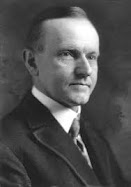
My love for USG continues unchecked. Actually, as many history buffs know, he was born Hiram Ulysses Grant, and his name was accidentally changed for him when he enrolled at West Point. So we'll call him HUG, because those are his initials, and because that's what I want to do to him.
Also in love with HUG? Abe Lincoln. Lincoln was crazy about HUG, and told him so as often as possible. All his previous generals, he said, had wanted him to make the large tactical decisions, which he felt unqualified to do, being a lawyer from Springfield. Grant wanted nothing from him but a free rein, which he was happy to give to the man who finally wanted the Union to fight the war. Lincoln used to visit Grant at the front to get away from the pressures of Washington. A curious mini-break, but one I would have loved to tag along on. Not since Adams and Jefferson have two presidents been more enamored with each other.
One of my favorite stories about HUG happened right after he got a promotion and had a new crop of underlings to meet. When he went to meet George Thomas, who was commanding the Army of the Cumberland, they had dinner together and then sat by the fireside. Neither of them spoke for about 30 minutes, and Thomas' staff was afraid that they were in a fight. In fact, they were kindred stoic spirits, and were enjoying sitting in silence.
Also in love with HUG? Everybody who ever served under him. He was the everyman's general. He was usually wearing a soldier's pants and shirt, "tucked into muddy boots," with his officer's insignia pinned to his shirt. He liked to walk around and talk to the men, or ride around the camp on horseback inspecting preparations. His hero was Zachary Taylor, who also dressed down, and interacted with his troops as often as possible, and was similarly unfussy about battle. It may be said that Zachary Taylor's influence on Grant was his greatest contribution to American history, far outshining his time as president. Men who served with both of them were stunned by how closely HUG modeled himself after Old Rough and Ready.
At this point in my reading of the biography, the war is over and Grant is aiding in Reconstruction when necessary (which is a lot). I feel that the second half won't contain as much guts and glory, but I also wish I could read about Grant forever.
Showing posts with label john adams. Show all posts
Showing posts with label john adams. Show all posts
March 19, 2012


March 08, 2012
"I can't spare this man; he fights."
I love Ulysses S. Grant. I love him. I've loved and admired many presidents in the past 3 years, but not since John Adams has a president seemed so eminently huggable. As with Adams, I suspect this fondness has everything to do with the biographer. David McCullough and Jean Edward Smith put less stock in "balanced impartiality" than more academic biographers, openly taking sides with their subject in conflict and skewering their enemies.
But beyond that, USG is just so loveable. I recently loved Lincoln, but of course he is larger than life, a majestic enigma. USG is smaller than life, frequently defeated by it. He's the first president I remember being described as "tender-hearted." He has these Charlie Brown moments where he's treated horribly and he's just like awww geeeez, somebody swindled me out of all my money again. But then he presses on with his faith in humanity intact.
Did he have a drinking problem? Yes, to an extent. After the Mexican War ended he had a horrible time trying to find work. He left his family (somewhere in the Midwest) and went to California, planning to send for them when he had raised enough money. But he couldn't do it. Plan after plan failed, and partner after partner stole from him, so years passed and he was all alone. Seven years! And he missed his wife. So he started drinking, and it got him fired from his military post, and he returned to Illinois to work for his father.
Reunited with his wife and kids, and with a small but steady income, he was determined to control his drinking. (He didn't quit drinking entirely, but he rarely had more than one drink a night.) Unfortunately, rumors will be rumors, and too many people in the war department knew the reason he had "resigned." When he was commissioned in the Civil War, he was a habitually excellent commander, but his higher-ups were often reluctant to promote him because of his rep. THEN, his lamebag superior, General Halitosis Halleck, ever trying to advance his own career prospects by degrading the people around him, wrote to Washington that he was "afraid Grant might be drinking again." This had no basis, because Halleck was in St. Louis and Grant was in wilds of Tennessee or something and Halleck had no idea whether or not he was drinking, but he thought he was go ahead and WRITE SUCH A THING TO THE SECRETARY OF WAR. BECAUSE FEDERAL CORRESPONDENCE IS A GREAT PLACE FOR WILD CONJECTURE. What a butthead.
Grant managed to keep winning battle after battle, however, so no matter how the rumors swirled in Washington, Lincoln refused to demote or fire him. "I can't spare this man; he fights." (This in stark contrast to the commander of all the Eastern forces, George McClellan, who avoided battle like it was a rectal thermometer.) HISTORICAL TIP: If you want to secure your legacy, get on the good side of one of the most eloquent men of all time. There will be all these pithy, elegant compliments about you on record.
January 19, 2012
The Demented Moses of Tennessee
I finished reading Impeached about 3 weeks ago and haven't written about it yet, which should tell you exactly how I felt about it. Andrew Johnson is that rare creature - a bad president who is also a boring president. Usually the bad presidents (Buchanan, Adams) are at least fun or educational to read about, and it's the ones whose administrations never get off the ground - your Martin Van Buren and your Franklin Pierce - that seem like a waste of time.
Part of the problem could be that this is the first non-biography I've read. Impeached is mainly an account of Johnson's impeachment trial, obviously, and spends just as much time on his critics as it does on him, because they were actually more involved in the trial than he was. With a traditional biography, I've usually built up some empathy for the presidents before they enter office, so that even if they are terrible I feel for them. But Impeached isn't about a journey to, through, and from the White House, it's about 4 horrible years.
[All this, of course, is neither a flaw or the fault of the book. I'm simply pointing out the differences in my reading experience.]
So, AJ was Lincoln's VP, chosen for that role (AS USUAL) unwisely (AS USUAL) because he was from the South. Did they really check to make sure he was down with Lincoln's policies? No. Did they check to see if he was even reeeeally a Republican? Also no. Did they check to make sure he wasn't a white supremacist? Hahahahaha. When he was sworn in as VP he was hammered, and delivered a long, unintelligible speech that made everyone embarrassed. He would repeat this performance a few years later, when he went on a stump speech tour of the Midwest, talking yards of nonsense at every stop and comparing himself to Jesus.
It would have been hard to fill Lincoln's shoes no matter what, but Johnson was bizarrely ill-qualified. The patient, conciliatory Unionist was replaced by an unreasonable bullhead. The first thing he did was decide that the recently freed slaves should be given neither citizenship nor voting rights. All the abolitionists, who had seen that as the end goal of the war, were like ummmmm wtf? They could expect support from the Republican president, but oh, Johnson had decided he wasn't a Republican anymore. No! He wanted to be a states rights "Jeffersonian." He vetoed the Civil Rights Bill, and all four of the Reconstruction Acts, although these five bills were all passed by a Congressional override. He was against the Fourteenth Amendment, which granted citizenship and federal rights to anyone born in American (except people born on Indian reservations, love you guys), but Congress wisely passed it by state ratification and joint resolution, so it wasn't subject to his veto.
He also disagreed with Republicans on what should be done with Confederate leaders. He didn't think that anyone who had served in the high ranks of the Confederate military or government should be punished in any way, opening the door for them to be reelected to the federal government. This put the fear of re-secession and another war into Republicans, but states rights what can you do?
The Republicans were just spitting mad, and kept writing impeachment articles. Many of them thought that Johnson was going to blindly steer the country right back into the 1850s and that they had to get rid of him in any way possible. The accusation - that he had fired Secretary of War Stanton in violation of the Tenure of Office Act (which they had recently passed) - was vague and purely political. Johnson's defense was that the Tenure of Office Act was unconstitutional and he didn't have to abide by it (which seems, in my opinion, to be true).
As the impeachment vote drew near, a black pastor prayed a public prayer for the conviction of "this demented Moses of Tennessee," which was my favorite part of the book. Johnson avoided impeachment by bribing lots of Senators.
Subscribe to:
Posts (Atom)