December 11, 2012

Don't let your sons grow up to be James Garfields

It may be clear that I really like Hayes. I dig his wife, his kids are hot, he seemed to be a very temperate and decisive man. A real Ed Harris type. He was not a great president, but not many are. He was, however, determined, ethical, effective, and fair. The federal government was a real mess from the catastrophe of the Johnson administration and the negligence of the Grant administration - Congress has gradually risen in power to almost overshadow the executive - and Hayes stopped the tide and started the process of turning it back.

He vowed to not seek a second term, because he (rightly) thought his civil service reform efforts would be muddied by the favors needed during a reelection campaign. And he was pleased when the Republican nominee in 1880 was his fellow Ohioan and friend James Garfield. [Notice how Ohio is having a big moment in post-Civil War America? It's like the new Virginia.] This underscores another reason I really like Hayes, and that is that I really hate James Garfield.

Perhaps more accurately, I really don't like Congressman and President Garfield, but I really hate young James Garfield. But before we get to that, I want to introduce you to someone:

This is Margaret Leech, author of the Garfield biography I read. Notice anything about her? She's a woman! And she wrote a presidential biography! It's an At Times Dull first!

A year or so ago I saw T Roosevelt biographer Edmund Morris speak, and in the signing line I asked him to recommend a Taft biography, which he did, and then he went on to say, "Make sure you read Margaret Leech." She's written biographies of Garfield and McKinley, a few novels, a lot of magazine work, and an account of life in D.C. during the Civil War. She was the first woman to win two Pulitzers. (Asterisk: her father-in-law was Joseph Pulitzer.) She's generally great. She actually died while writing The Garfield Orbit and the last two chapters were finished from her notes, but I decided to read it anyway because Garfield and his 6-month term don't matter that much.

It's interesting that this book was written by a woman, because it's by far the soapiest I've read. But then, maybe Garfield is just the soapiest president so far. He was born into poverty in Ohio and his father - as so many fathers of future presidents do - died when Garfield was still a boy. He very famously worked on the canal as a teenager and went to a prep school run by The Disciples of Christ, a fairly strict sect of Christianity he converted to when he was 18ish.

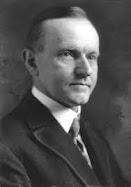
He was very alpha male. He was boisterous, magnetic, inspiring and condescending. He was known from an early age as a talented orator, and spent most of his weekends preaching. Women routinely became obsessed with him, which is curious because this is his face:

Pass.

I just think he was a tool. He was one of those insecure egomaniacs who want to be in charge of everything so they can feel loved. I spent all of this book annoyed.

For starters, he was a caveman when it came to women. He met his best friend, Almeda Booth, when they were at school together. They would stay up all night together translating Greek and discussing theology and making lesson plans. They were extremely compatible, but he laughed at the idea of them being together because she was ugly, and women are not for conversing with, they're for doing your shirts.

Which is why he married Lucretia, or Crete. Crete was tiny, shy, and in awe of James. They fell in love and got engaged, and then he went to Massachusetts to attend Williams before they got married. While at Williams, he fell completely out of love with Crete. He started sleeping with his friend Rebecca, because she "loved his preaching." While this went on, he convinced Crete and Rebecca that they should write letters to each other, because he wanted his friend and his fiancee to "be like sisters." Total Garfield.

Crete went out to Massachusetts for James's graduation and it was the worst week of her life because James ignored her and made her hang out with Rebecca the whole time, like the catch that he was. After college he moved back to Ohio and became president of his old school and meant to do right by Crete, who had been waiting around for him for years, even though he didn't like her anymore. He was elected to the Ohio State Senate, because his preaching had made him so famous, and he and Crete both moved to Columbus, still unmarried, where they thought a change of scene would give them a fresh start. WRONG. They still didn't like each other very much, but after 5 years of engagement, only 1.5 of which had been happy, there was nothing left to do but GET MARRIED ANYWAY. They rented a room in a boardinghouse for their first miserable years of marriage, unaided by the fact that ugly soulmate Almeda moved into the room next door to theirs and took all of James's attention.

What is baffling about their whole story is that James and Crete went on to be extremely happy. After 3 years of bad marriage he went off to war. After a year he had to return to Ohio for the summer to recuperate from illness, and, by their own accounts, their physical reunion was somewhat invigorating. Then, they fell in love again. After that they would always describe their marriage as having been perfect after they got through the miserable beginning. I mean, don't try this at home, but I'm glad it worked out for them. On the other hand, there were a lot of affair rumors for the whole of Garfield's life. Crete never believed them but I have no trouble doing so.

In my next post I will talk about how Garfield had diarrhea for the whole of the Civil War.

December 07, 2012

President Facts: Hayes edition

Hayes was the first president to visit the West Coast while in office.

Hayes was the first president to have a telephone in the White House, but they barely used it because they had no one to call.

Rud and Lucy were total abstainers from alcohol. Alcohol was banned in their White House, although they were known for their lavish entertaining. They claim that the money they saved on alcohol allowed them to plan better parties.

Lucy Hayes was the first first lady to have attended college!

Lucy Hayes instituted the White House Easter Egg Roll when D.C. banned it from the Capitol lawn.

December 06, 2012

RBH and the sober second thought of the people

Here's something you may already know if you are a close and dedicated reader of ATD: I don't understand the economy and I'm not trying to correct that. "The president had to deal with some economic issues" is always my least favorite part of the biographies. Presidents whose entire tenures revolve around economic problems, such as Martin Van Buren, as far as I recall, really just slide right by without me getting interested in them. Sorry, Martin, you seem to have been a good Secretary of State.

I'm obviously ramping up to the economic issue of Rud's term, which was the coinage of silver. Some people wanted to keep doing it and some didn't. It was a big deal! That's all I can say. He also dealt with the railroad boom and continue the executive slog with the Indian Affairs Bureau. None of it, I have to say, is particularly exemplary.

Rud's big cause, and one that I can really get behind, was civil service reform. Particularly, he went after what they called patronage and the spoilsmen. Perhaps you have seen Lincoln? You know how they buy votes by promising mid-level federal jobs? That is patronage. Each president, after elected, got to fire anybody he wished - from the cabinet to the postmaster of Akron - and appoint whomever he wished. This system was the dumbest. First of all, if your wife's cousin's dad is Franklin Pierce and that means you get to be assistants customs collector at Baltimore, you are going to get fired as soon as Pierce is out of office. Second of all, the civil service was full of unqualified brothers-in-law. Third of all, appointments took up MONTHS AND MONTHS of the president's time after election and inauguration. The White House was flooded with office seekers or letters from office seekers at all times. Every single president has hated this part of their job, but none seriously questioned its necessity until Rud.

Patronage was at the heart of 19th century politics. This was still a time when it was unseemly to presidential candidates to campaign for themselves (just imagine!), so their "friends" would travel around giving speeches on their behalf and writing editorials. Once elected, the president would give these friends new jobs in return. Jobs were also given in return for votes or to get someone out of your state's Senate race. So when Rud started pushing for civil service reform, all the politicians who loved giving jobs out - known as spoilsmen - were like, how will we get anything done? Roscoe Conkling, a senator from New York and close friend of Grant, fought Hayes on this as hard as he could, because patronage was his main source of power. The customs collector at New York was the most powerful federal job in the country, and Conkling was usually able to dictate to the president who should have it. To prove a point, Hayes' fired the man whom Conkling had placed in that post. That man was Chester Arthur! It made Conkling so mad!

I commend Hayes for his effort, mostly because this blogger could do without 30 pages of "the president worried over federal appointments" that comes in the middle of every biography. Hayes certainly did not fix civil service reform, but he was right to introduce the issue, which would take decades to fix. Hayes angered a lot of people, but he frequently referred to "the sober second thought of the people," who he was confident would understand his motivations in time. It was a feeling for the long game that comes to many presidents once they're in office.

Unfortunately, in order to win the presidency four years later, Garfield really needed Conkling on his side, so the Republicans put Chester Arthur on the ticket as vice president, who obviously became president a few months into Garfield's term. When Grant died, Hayes attended the funeral with president Arthur. He was pretty sure it was going to be awkward attending a funeral with a man he had fired, but they had a great time and Arthur never brought it up. Way to go, guys!

This long-game perspective did not always make Rud a good president. When it came to Reconstruction, and all the horrible things that were going on down there, like the first black cadet having his ear cut off at West Point, Rud's opinion was: the South should be better educated. Which, true, but also people who cut off other people's ears should be prosecuted in the present day. (Technically, they were, but they were found innocent. The black cadet probably cut off his own ear for attention! was the verdict.) But we're entering a time when the presidents wanted to prove to the South that they trusted them again, so they were trying to be hands-off about egregious civil rights violations. It was going so-so.

November 30, 2012

1876: Just vote as many times as you want there, sir.

Have you seen Spielberg's Lincoln? Do you remember the scene when Lincoln is convincing the Congressman from Kentucky to vote for the amendment, and Rep. Kentucky says "We're not ready for freed slaves" and Lincoln says "We're not ready for peace either" and everyone goes ah hahaha rhetorical genius.

They were both right. Man, the 1860s sucked. Also the 1870s. Johnson was an unmitigated disaster of a president, Grant was a competent leader but not forceful enough for the times. Hoogenboom keeps calling the Grant administration "rife with corruption," and that hurts my feelings, but it's true that it was not an opportune time to lead with quiet dignity and hope everyone noticed.

ANYWAY. The Republican party was fixing to split in two. The radical faction were eager for full civil rights for freed slaves, the moderate faction was not. The division was stark enough that no candidate for the 1876 election could satisfy both sides. Enter Rutherford B Hayes, who had been out of national government for 11 years. He had served two terms as Ohio's governor (his pet project? prison reform! full of surprises, was Rud) and then retired. After a few years of leisure, adding on to his house and serving on library boards, he ran for a third term at the urging of his political allies, who had the express goal of nominating him for a president once he was back in office. And he did in fact emerge as the nominee from the 9 original candidates, because he's Rud Hayes and everything is easy, but especially because he was moderate and had been away from the fray for 11 years, so no one had any beef with him (just like how James Buchanan got nominated, except different because Hayes wasn't a blowhard).

He ran in the general election against Democrat Samuel Tilden, and here's where the horror of the 1870s comes in. The Republican party in the South was almost entirely black, the Democratic party almost entirely white. There had, at one point, been white Republicans, but when all the blacks got the right to vote and became Republican they were like, bye! Because of racism. Southern Democrats were not in favor of "Republicans" voting, and tried to stop them from doing so with intimidation, violence, and trickery. Some Democratic ballots were printed with pictures of Abraham Lincoln's head at the top so that illiterate "Republicans" would think they were voting for Republican when they were not. In other cases, Democratic election workers would allow fellow whites "Democrats" to vote as many times as they pleased.

So, according to historical record, Tilden "won the popular vote," but the real story is complicated. Many of Tilden's votes were fraudulently obtained or duplicate. Many, many Republicans were prevented from voting. The election results in Florida, Louisiana, South Carolina, and Oregon were contested, leaving 20 electoral votes unassigned after the initial counts came in. (Oregon was disputed merely because one of its electors had a federal job, and therefore was ineligible to be an elector, but there was never any questions Oregon would go to Hayes.)

It was up to the president of the Senate, Senator Thomas Ferry, to decide which electoral votes to count (there was at that moment no vice president). Ferry was like, thanks but no thanks, so Congress formed an Electoral Commission made up of 5 Senators, 5 Representatives, and 5 Supreme Court justices. They heard arguments on the voting results in the 3 disputed states. Their decision boiled down to the fact that, while thousands of votes for each candidate were thrown out, more Democratic votes were thrown out than Republican votes, and they gave all 20 disputed electoral votes to Hayes, 2 days before inauguration.

A lot of attention is paid to the fact that Tilden won the popular vote but lost the election, but the popular vote he won is made of fictions. A just election of registered votes would probably have elected Hayes. A just election did not take place in 1876, but I'm convinced the people's preferred candidate got the job anyway. Hurray for the legislature!

This is an interesting recap of the election, if you like numbers.

November 27, 2012

The Beards

As some you know, I like to group the presidency into relative phases.

1 - Founding Father (Washington, Adams, Jefferson)

2 - Nation Builders (Madison, Monroe, Quincy Adams)

3 - Expansionists (Jackson, Van Buren, Harrison, Tyler, Polk)

4 - Compromisers (Taylor, Fillmore, Pierce, Buchanan)

5 - Civil War Presidents (Lincoln, Johnson, Grant)

and now


6 - Welcome to the beard years, America (Hayes, Garfield, Arthur, Cleveland, Harrison)

For the next few decades, it will be impossible to become president without a lot of unruly hair on your face. I suppose these guys are more like The Reconstructionists, or the The Guys Who Attempt Reconstruction But It Is So Hard.

The two main themes of Hayes' political career were equal rights and social justice, which were both cornerstones of the Republican platform in the 1870s. (Take a minute with that one.)

Hayes was not a genius - fewer and fewer presidents are as we go along - but he was driven and well-liked. He graduated as valedictorian from Kenyon College and then went to Harvard Law before moving back to Ohio, where he started practicing law in Cincinnati and married Lucy (who is awesome, more on her later.) His work on fugitive slave cases brought him to the attention of the Republican party, and the city council eventually elected him City Solicitor (thus inaugurating a tradition of Republicans saying "Hey Rud! You should have this job!" and him being like "Sure!" This will later include a seat in Congress, the governorship, and the presidency. His ambition was almost entirely external.)

Then he met the second love of his life, the 23rd Regiment of Ohio Volunteer Infantry. Don't even try to get Rud to shut up about the 23rd Ohio. He named his fourth son after his Civil War commander, George Crook. (Remember when Zachary Taylor named his daughter after his favorite fort? I love that guy.) He was wounded 4 times, one of which was serious enough that Lucy heard he was dead, and ended the war as a major general, although he was always quick to point out that he never fought as one, his last engagement coming when he was still a colonel.

While still in the army, he was elected to Congress. He refused to take a break to campaign, but won anyway. See? He never had to do anything. He beat a Democratic incumbent by writing open letters to voters. He was sworn in to Congress in December 1865, right in time for the grand showdown between Thaddeus Stevens and Andrew Johnson. He entered a moderate, but was quickly taken by Stevens and ended up voting the radical line on the 14th Amendment, the Civil Rights Act, The Tenure of Office Act, and The Reconstruction Acts.

He resigned from Congress in July 1867 after only a year and a half, although a historic year and a half it was, to run for Governor of Ohio. Some would think it strange to leave Congress during one of the most important times in our nation's history to run Ohio, but hey, when you're Rutherford B Hayes everything seems to work out for you.

November 26, 2012

Guess who was super good-looking?

The Hayes boys!

First of all, Rutherford (Rud) B. Hayes was a fine-looking young man. Everyone talks about Franklin Pierce being the best-looking president. Have they seen Rud Hayes?

Cowabunga!


But his sons were also gorgeous. [Side note: Rud and Lucy were awesome at naming their kids: Birchard, Webb, Rud, Joseph, Georgey, Fanny, Scott, and Manning.]

Of the four sons who lived into adulthood, Webb and Rud were particularly dreamy.

Riiiiiiiight? Their older brother, Birch, seems to have gotten his looks from....somewhere else. (I've never seen a picture of their young brother above the age of 17, because he was a little tyke when Rud Sr. was in the White House.)

I think HBO needs to get on a pilot about Webb and Rud, two hot young governor's sons who grew up in Ohio and then went into the law and engineering. I would watch it.

April 11, 2012

Hey, Lincoln

This statue of Lincoln is a block away from my new apartment (finding that out was a great surprise). It's called "Young Lincoln," which I think is why he's so chesty (top 3 buttons!) and he's holding a book. I walk by it about thrice in a given week, and if there aren't skateboarders hanging around I always say hi.

It gives me a legitimate emotional boost to walk by and see young Lincoln. More than once it has noticeably lightened a dark mood. I don't know, seeing him there just makes me think that I should go about my day in an optimistic, productive, deliberate, and uncomplaining manner.

Now that I love Grant with all my heart and soul, I wonder what it would be like to walk by him every few days. He'd probably be pictured (carved? portrayed?) in a camp chair, in his messy uniform, looking kind of determined and unkempt. I don't think seeing him would giving me national anthem feelings, like young Abe up there, I think it would make me want to sit down beside him and be like "Duuuude, my Target card bill is insaaaane. But that ottoman is really essential to my living room, you know? I'll just have to pass on those herringbone Toms I guess."

This is the fundamental difference between Lincoln and Grant. Lincoln was and remains a man whose wisdom and vision existed above the fray. Even when the fray was his job. Grant's more of a fraymaster. He in fact floundered when not in the fray, when not dealing with a thousand tiny problems. In the classic comparison between the hedgehog and the fox, Lincoln is the hedgehog, Grant the fox. 

The introduction to Carl Sandburg's one-volume biography of Lincoln is a kind of recap of all the hagiography that sprang up in the early 20th century. He gets compared to mountains, to the sea, to the rulers of Rome. It's a little crazy. And yet, as the awesomely named Gamaliel Bradford puts it, "He still smiles, and remains impenetrable."
 
I do love Grant more, because I feel that I know him better. A mysterious man he was not, but he was such a good man. The two main issues of his presidency were Reconstruction and the western war with the Native Americans, and he approached both situations with as much magnanimity and grace as anyone in the country could have done. (Watching him try so earnestly to reform white/Indian relations when it was far too late was the most bittersweet reading experience of this project so far.) I will miss them both, as I reluctantly leave the Civil War era behind for the Rutherford B. Hayes era.