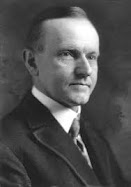
Archibald Willingham DeGraffenreid Clarendon Butt, known as Archie to his friends, in which number could be counted Big Ego Roosevelt and Big Bill Taft, was a Georgia boy who worked as a newspaperman and then joined the army volunteers during the Spanish-American War, serving mainly as a quartermaster and working his way up to major.
So yes, Major Butt is what I call him.
After getting to know both of them personally when he worked for the army in The Philippines, Major Butt served as military aide to both Big Ego and Big Bill. (I'm not sure what the role of military aide entailed, but during Taft's administration he became the president's closest adviser, friend, and confidante.)
This is obviously comical and somewhat sad — that the president who couldn't catch a break had a best friend named Major Butt — but ol' Butt over there was truly a swell guy.
Quartermasters are the unglamorous heroes of the military, enormously essential but rarely acknowledged for their work. (Ulysses S. Grant worked as a quartermaster so obviously I love them. It was kind of the secret to why he was a great general, but that's not what we're here to talk about). At one point he was in charge of transporting 500 mules from Hawaii to The Philippines. That all 500 survived the journey was what first made the higher-ups take notice.
He moved to Washington in 1908 to serve under TR and then Big Bill. He wrote daily letters to his sister Clara, which are enormously helpful to historians in understanding the two presidents and especially their relationship to each other. Being close to both of them, their eventual feud stressed him out, and Taft told him to go on vacation during the 1912 primaries so he wouldn't have to take sides. He spent 6 weeks in Europe with his "housemate and friend" Francis (they were gay), even traveling to the Vatican with a letter from Taft to Pope Pius X.
Major Butt boarded the HMS Titanic in April 1912. Taft spoke at memorial services for him both in Georgia and Washington, although his eulogy at the second service had to be cut short because Taft couldn't stop crying. (To be totally honest, Taft cried a lot in 1912.) A bridge commemorating his death, known by locals as Butt Bridge, was built in his hometown of August, GA in 1914, and escaped demolition by a memorable "Save Our Butt" campaign in 1994 and 1995.
October 01, 2014
September 25, 2014
OH TAFT
Oh, Taft. When a chapter of your biography is titled "So Little Time Remained," it's a bad sign. The second paragraph of this chapter starts with the words: "Another major problem for which there was not enough time..."
["Another major problem for which there was not enough time" could be the title of this blog come to think of it, were At Times Dull not so snappy.]
The chapter that followed this one was titled "A Final Futile Dream." Henry F. Pringle is not in raptures over Big Bill, is what I'm getting at. I can't bring myself to outline the major political issues of his administration. There was a to-do with Japan and China regarding Manchuria. There was unrest in Mexico that Taft didn't want to get involved with. There were oh so many problems with the tariff. There was, I'm not kidding, an enormous debate over the prices of second class mail.
Taft become more stubborn and isolated as his term went on and garnered more and more criticism. He was also obviously hurt by the fact that Roosevelt openly opposed many of his policies, even though he'd become president essentially at Roosevelt's urging. Oh except when things were getting crazy in Mexico Roosevelt wrote him a letter that was like "Hey I know we're not friends anymore and in fact I'm tanking your political career but on the off chance we go to war with Mexico I'd love to be in it, like leading 3 cavalry regiments would be pretty cool." UGH TR WE KNOW YOU LOVE WAR AND HORSES, GO HOME PLEASE.
A lot of Taft's dreams came true after his presidency so I've got that to look forward to. In the meantime, there's a cute story about Taft and Alice Roosevelt. You may remember that they traveled together on a diplomatic mission to Asia, and had become close friends. He sent her a silver cigarette case for Christmas, because unlike most men in Washington he was down with her smoking, and she wrote back and said that he was the best.
September 22, 2014
Taft: The Early Years That I Don't Know Much About
In the feast-or-famine way of presidential biographies, it was slim pickings for Taft. There's one book just about his 4 years as president, one about his emotional life (??), a few that are out of print, and a 1,000-page 2-volume biography that is regarded as mediocre. Its author was admittedly a big fan of TR and decided to research Taft because of their relationship, but ultimately didn't like him. And yet his is my best option, so I decided to read just the second volume of William Howard Taft by Henry Pringle.
It starts in 1910 when the mid-term Taft is in a tariff battle. As is well-documented on this page, I do not understand the tariff and every time it comes up I zone out, so this was not an auspicious beginning.
Here is what I know about Taft's life pre-1910 due to his apperances in the Roosevelt biography and a quick reading of his wikipedia page.
- He went to Yale, where he got the nickname "Big Bill," was a wrestler, and graduated 2nd in his class.
- He then returned to Ohio to start his law career in order to pursue his dream job of supreme court justice. (Ohio is to the turn of the 20th century what Virginia was to the turn of the 19th century as far as presidential politics go. Including Taft, 4 of the last 8 presidents — Hayes, Garfield, McKinley, Taft — were Buckeyes.)
- Benjamin Harrison made him Solicitor General, and then McKinley put him in charge of the newly-acquired Philippines.
- When Roosevelt took over, Big Bill was Governor-General of The Philippines. Roosevelt repeatedly offered him jobs in the federal government, including a supreme court seat a few times, but he refused because he wanted to finish the job he'd started there. I'm actually pretty sad that I don't get to read more about his time as Governor-General — apparently he was really good at it and had a great relationship with the Filipinos, who found him lovable if baffling walking around in the tropical heat in a 3-piece suit.
- Roosevelt eventually convinced him to come home and be Secretary of War, and was public about the fact that he thought Taft should succeed him as president.
- Roosevelt loved Taft. Taft loved Roosevelt. Know who didn't love Roosevelt? Helen Taft. Except Helen wanted to be first lady, and Roosevelt was going to make that happen. Taft would have preferred to wait for a supreme court seat. Helen and Roosevelt had other opinions.
September 20, 2014
July 22, 2014
Theodore Roosevelt: Spelling Advocate
Do you know why we Americans use the spelling "theater" while our British cousins use the spelling "theatre?" Because of Theodore Roosevelt!
Kind of.
Peeple uzed to spelle wordes howwever the hel thay fellt.
Movements for standardized spelling came and went, but no standardized dictionary ever took hold.
Then in 1906 Andrew Carnegie founded the Simplified Spelling Board, pledging $15,000 out of his own pocket every year for 5 years. The SSB published a list of 300 errant words whose spellings they wanted to nail down for eternity. These 300 words were comprised mainly of the following four standardizations:
-ed words changed to -t (addressed/addresst)
-ou words changed to -o (colour/color)
-re words changed to -er (theatre/theater)
-ise words changed to -ize (categorise/categorize)
-plus some miscellaneous simplifications like catalogue/catalog
TR was all over it, and immediately ordered the government to follow these rules, and adopted them in his own correspondence (to the chagrin of his biographers, to be sure). As you will infer, if you speak English, some of these changes stuck and some didn't.
A few months later Congress reversed Roosevelt's pronouncement, saying that government printing offices could continue to use whichever spelling they wanted, but the idea stuck that these simplifications were the "American way," and with Carnegie and Roosevelt behind the idea, it kept gaining steam from there.
July 16, 2014
an unsafe president
Trying to write about Theodore Roosevelt for this blog has gone a long way in demonstrating to me what a genius Edmund Morris is. TR is obviously a fun subject, because he was both a world-class scholar and statesman as well as an eternal 9-year-old boy. But what makes him fascinating also makes him hard to grasp — Who is this man who reads ethnographies of India in Italian in his free moments between presidential duties, and also spends hours wrestling and sleeping outside with his 5 youngest children?
When I saw Edmund Morris speak in 2010 I was struck by how obviously Morris understood TR, and the same is obvious in the book. TR contained a multitude of personalities, and his closest friends and family never knew which one they'd be encountering on any given day — the ardent naturalist, the workaholic, the sportsman, the prankster, the politician, the bookworm. This was the main concern when his named started being floated for president. People thought he was capable of it, sure, but they also thought he could be reckless and unpredictable — descriptors rarely valued in a head of state.
I forget who said this, because I read the first volume of the biography a year ago, but one of his friends expressed his misgivings about TR in the executive office by saying, "The thing you have to understand is that he's about 12."
He also, as Deputy Secretary of the Navy, essentially started the Spanish-American War while his boss and McKinley were out of town for the summer so that he could fight in it. This pretty much soured me on our TR.
The collective response to every other vice president who took office upon a president's death — Tyler, Johnson, and Arthur —had basically been: oops! The American voting public is endlessly capable of forgetting that vice presidents could become the president.
[I just did some math. To date, 7 out of the 47 US vice presidents have had to take over the presidency because of death or resignation — about 1 in 7. That's almost a 15% chance that the VP will become POTUS. It's not a lot, but it's not a lightning strike. And yet we're always surprised!]
When McKinley died and TR took office, no one was sure how it would turn out, but no one thought it would be boring. It was not. TR, in slightly less than two terms:
- Arranged for the building of the Panama Canal
- Transferred the Philippines back to local control (Taft gets most of the credit for this)
- Hosted the negotiations that ended the Russo-Japanese war (in Portsmouth! Did you know that?)
and thereby
- Established the US as a world power and peacekeeper
and thereby
- Won the Nobel Peace Prize
- Negotiated the end of a massive coal miner strike
and
- Fought against railroad monopolies
thereby
- Starting a legal conversation on corporations vs. labor that is still relevant today
such as
- Ushering legislation regarding workman's comp, 8-hour days, employer liability, child labor, et cetera through Congress
- Hosted a conservation conference attended by governors, environmentalists (before they were called that), financial tycoons, and various government officials that codified the National Park Service, National Monuments, National Forests, and wildlife preserves
- Made the US Navy the second-largest in the world, and by far the most advanced
- and much more!
The secrets to his effectiveness were his enormous public popularity combined with the fact that no one ever thought he was bluffing. He was a brilliant and tireless politician, but not a cagey one. Someone called him "an unsafe president," meaning that at any given time he might use his enormous power to make a decision completely independent of counsel. It's almost unrecognizable.
June 24, 2014
Alice Roosevelt's Sad, Amazing Life
![]() |
| Alice Roosevelt being the boss. |
Theodore married Alice Hathaway Lee when he was 22. Four years later, she died after giving birth to their daughter, Alice Lee Roosevelt. TR was devastated, and after depositing baby Alice with his sister, left for North Dakota for a few years.
When he came back East, he had regained his good spirits and soon married Edith, his childhood sweetheart. For the rest of his life he never mentioned his first wife again, even to their daughter, and he omitted any mention of her from his autobiography.
Except of course he had a daughter with the exact same name, which hurt his pretend-that-never-happened strategy. After he and Edith got married, she insisted that they take Alice back from her aunt and raise her, starting a long cycle of Alice getting shuttled from house to house (aunt, parents, grandparents for the summer, cousins), really strengthening the impression she had that no one really wanted her around, and that her father saw her as little more than a sad reminder. But, she worshiped her father, and wanted his attention as much as she wished she could be independent of him.
Then she grew into her good looks, which thank heaven she got from her mother, and became a TEENAGE DYNAMO. Beautiful, attention-starved, and largely left to her own devices by her father and stepmother, she became America's first daughter at the age of 17. AWESOME. (Guess who didn't like her: her cousin Eleanor, obviously.)
She quickly befriended the niece of the Russian ambassador (except she wasn't really his niece she was his mistress lol), who taught her to smoke and drink. Alice had a pet snake that she carried around with her, and would sometimes smoke on the White House roof where everyone could see her. She was one of the first women in Washington to drive a car, which she did recklessly and very fast. Teddy once said, "I can either run the country or I can attend to Alice, but I cannot possibly do both."
It hurt her deeply to see her father dote on her 5 younger half-siblings — attention she had never received from him at the same age. It's ironic that, neglected by him because of who her mother was, she was more his daughter than any of them.
She was immensely popular with the American public, of course, and was sent on an official delegation to Asia during TR's second term. There she charmed all the royalty in Japan, China, and Korea, and spent the ship voyage there and back making out with Congressman Nick Longworth, whom she would marry soon after.
They married while TR was still in office, meaning that Edith got to enjoy the last 2 years of his term with Alice living somewhere else. Their wedding photo is something else. TR, usually the life of the party, was stiff and quiet on his daughter's wedding day. In the photo he took with her and her new husband, he's visibly leaning away from her. Morris surmises that this might have something to do with Alice's dress being made out of material from her mother's wedding dress, and TR's memories of marrying that Alice. FATHER OF THE YEAR, TR!
Alice and Nick were happy for a few years, but in 1912 they took opposite sides in a presidential primary and the rift was permanent. Nick had a long string of affairs for the remainder of their marriage, and Alice had one big one, with Senator William Borah, who was the father of her only child (a fact she admitted to in her autobiography because you can't keep Alice in a corner).
Nick died in 1931, after 25 years of marriage, and Alice outlived him by almost 50, continuing to be a fixture of Washington social and political life until her death in 1980. It was once noted that she knew every president from Benjamin Harrison to Jimmy Carter personally. She was close friends with Bobby Kennedy and Richard Nixon, until the latter quoted her father in his resignation speech.
As the grande dame of Washington, she's described as malicious, intimidating, and quick-witted. She was banned from both the Taft and Wilson White House for being rude. All will fear her and despair, essentially. Her daughter Paulina died from an overdose of sleeping pills at age 32, and Alice got custody of her granddaughter Joanna, whom she raised with much more care and attention than she had her own daughter, or than her parents had with her.
I'm fairly certain Alice would reject my pity, but I can't help but think of her as poor Alice every time she comes up.
Subscribe to:
Posts (Atom)