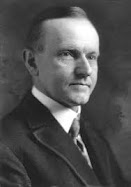
BH was always fairly close with his father. John Scott Harrison - uniquely the son of a president and the father of a president - was himself an Ohio Congressman. He wrote little Ben a lot of letters full of good political advice.
By the time he died, Ben was already a well-known trial attorney and frequently in the running for Indiana's Governorship or Senate seat (although at the time of his father's death I don't think he had yet claimed his eventual Senate win).
When John Scott died, all the surviving Harrison boys gathered in North Bend, Ohio for the funeral. At the burial, they noticed that a neighboring grave, that of their recently deceased relative August Devin, was disturbed. Suspecting a grave robbery, Ben's brother John Jr. vowed to investigate on behalf of the Devin family.
Body snatching was a common practice at the time, as corpses were needed for medical education, but demand outweighed supply. In fact, many families would hire someone to guard the grave of their deceased loved one for the first month after their death, which was prime body snatching time.
John Jr. visited the Ohio Medical College, where it was known that stolen corpses arrived at night through a chute. They got a janitor to show them around, and eventually found a rope hanging in an elevator shaft, with what looked like a body suspended at the end of it. When they pulled up the rope, John Jr. discovered the body - not of Augustus Devins - but of his own father.
DUH DUH DUMMMM.
I cannot imagine the horror of that moment. Clearly the Harrisons were furious, and the Ohio Medical College should have been mortified that they had just pissed off one of the best trial lawyers in the west. Bizarrely, they were not. Their spokesman emerged as a cavalier jerk who was brashly unapologetic. His basic response was, you guys don't get it, we really need bodies, this is how we teach doctors. The college claimed ignorance of who the body snatchers were and who at the college was responsible for receiving them (although a night janitor was the obvious suspect.)
Despite how insane these claims were, the College did in fact avoid all culpability in the inevitable Harrison-led trial, letting a few staff members take the fall. Harrison himself seemed to want to move on from this fiasco as quickly as possible. After re-burying his father, he was rarely heard to mention him for the rest of his life.
January 23, 2013


January 18, 2013
Benjamin Harrison: General Thoughts
I am ready to resume my writing about Presidents with Benjamin Harrison, the 23rd President, and the only from our home state of Indiana. Most of our Hoosier readers will do a double--or even spit-take at the information that there has been just the one President from Indiana. We tend to be uncommonly proud of our granfalloon. But rather than write about the dearth of Indiana denizens in the White House, I'll instead devote this post to Harrison's more meaningful label: the ex-General President.
We are now accustomed to Commanders-In-Chief who did not attain a high military rank. Indeed, a generation of Americans (those aged 21 and younger) have never had a President who served active duty at all. But time was that a generalship was the surest step toward the presidency. Of the first 23 Presidents, Harrison inclusive, 11 had served as generals. Six(!) of these Generals served in the Civil War alone. After Harrison, the country waited 60 years for Eisenhower to be elected, and has been waiting 52 years since then, and counting.
This biography is unusual in our series because it focuses only on Harrison's pre-Presidential years. The middle of a three-part series, this volume covers Harrison's time between the Civil War and the Presidency. At times interesting, this close-up of a young man's transition to middle age allows us to study his attendant transition between military and civilian service. This topic certainly interested Harrison and his fellow Hoosiers. Harrison received a hero's reception at his welcome home parade in Indianapolis, but sensed "the hidden fears of some who anticipated riot and bloodshed from the returning veterans." He assured the crowd that the returning soldiers would expect no preferential treatment, but promised that "you will have to brighten your wits and quicken your pace," because "we mean to be felt in politics as well as business."
The first third of the book is devoted to Harrison making good on his promise in the business arena. He quickly established himself as the best trial lawyer in Indiana and found a niche collecting and analyzing Supreme Court argument and decisions (big business today). Thus far it would seem that his General tendencies translated to business life in his demands for obedience and perfection: "He hated stupidity, expecting of subordinates the same high level of workmanship of which he himself was capable. Small talk and unnecessary intrusions annoyed him most."
His prickliness extended to the homefront. When his daughter wished to take dance lessons, Harrison's wife Carrie had to conspire with other mothers to work around the General's objections. "I don't know what to do," she despaired, "Ben would never allow an ungodly fiddle in the house."
I set the book down just as Harrison began to be felt in the public arena, and I'll be curious to see how his rigid personality plays in personal politics.
January 15, 2013
Grover Cleveland also happened
One of my New Year's resolutions in 2012 was to hit the halfway mark of At Times Dull, which, by finishing An Honest President on December 30, I accomplished. Hurray for me!
In order to do this, you may have noticed that I steamrolled through the 1870s and 80s in the month of December. As such, Cleveland was the 4th president I read about in roughly 6 weeks, and he failed to stand out.
Or rather, the things that stand out about him are the trivial things. He was the first president to use the terms "executive privilege" and "welfare state." He was the second president in a row to be the son of a preacher, and the second president in a row to be fat. He got a woman pregnant when he was a young buck, and that came back to bite him in the campaign (though obviously not that much). He stayed single until after he became president. His wife was 21, the daughter of his late business partner. His was the first wedding in the White House, and his daughter Ruth was the first birth in the White House. The candy bar Baby Ruth was named after her, not the baseball player. He was the second president in a row to have a secret medical condition - a tumor on the roof of his mouth. In the guise of a vacation cruise, his surgeon removed the tumor and part of his jaw while they were on board a yacht. And, of course, he remains the only president ever to have served two non-consecutive terms. He is both the 22nd and 24th president.
(Remember: Because of this, "How many men have been President of the United States?" is always a trick question. Although Barack Obama is the 44th president, he is only the 43rd man to be president.)
He was not a genius, but he was very confident and logical. He climbed the ranks of New York politics because of how unreserved he was in standing up to corruption. As mayor of Buffalo and then Governor of New York, he was known for vetoing anything he knew to be a result of corruption. He believed strongly in the accountability of politicians to their constituents.
In 1880, there hadn't been a Democratic president since James Buchanan, since he and his party were largely blamed for the Civil War. However, in 20 years of power, the Republicans had become more and more open about their corruption and their infighting, so a plain-speaking veto governor was just the image makeover the Democrats needed.
His first term had mostly to do with silver coinage and the tariff, which was gripping reading. He lost re-election to Benjamin Harrison for reasons which Jeffers never made totally clear. The nation was enthralled with him, especially when he married a 21-year-old and had a cute baby, but perhaps found his stubbornness uninspiring.
Harrison's one term as president, however, was a disaster. Residing over the "billion dollar Congress," Harrison and the Republicans managed to spend the gigantic surplus that presidents had been sitting on since the Civil War (wartime tariffs had not been lowered after the war was over).
So then American was like, Cleveland wasn't so bad, and elected him to the term after Harrison's. This one was more eventful, because labor exploded. Namely, the Pullman Strike happened on Cleveland's second term watch, which he shut down with federal troops because mail wasn't being delivered. So that part was pretty interesting.
Other than that, honestly, Cleveland kind of came and went for me. Tariffs, reconstruction, Indians, Central America - these are all plots that continue to move slowly forward, without any one president making a huge impact on their course. Cleveland was a refreshing guy after all the bluff and bluster of the New York Republicans, and I think that was a valuable palliative to Gilded Age politics, but he was no political marvel.
But oh, readers, At Times Dull is getting exciting. The 20th century is on the horizon, and the germs of its themes are starting to show up. Teddy Roosevelt was ubiquitous in this bio, as was Mark Twain. It's nice to be back in recognizable times.
January 01, 2013
presidential fact #23
Chet Arthur was the subject of the first birther controversy. He was born in Vermont, only miles from the Canadian border. His maternal grandparents lived in Canada, and some claimed that he was born while his mother was at their house rather than her own.
December 31, 2012
presidential fact #22
Although never a serious contender, Robert Todd Lincoln was briefly considered as Republican nominee for president in 1884.
December 28, 2012
Chet Arthur as president. Good God!

The problem with this move, politically, was that Hayes and Arthur were both Republicans. So was Conkling! The Republican party was bitterly divided into factions - the Radicals, the Stalwarts, and the moderates in between (sometimes called Mugwumps, a term which also included Democrats). Although Congress was usually split quite evenly between parties, there hadn't been a Democratic president since Buchanan. The Republicans would fight amongst themselves during a presidency, but every 4 years would have to figure out a way to back the same person for president.

But Arthur had tied his fortunes to Conkling early on. The son of a poor preacher who moved around a lot, he seemed to want the opposite — a steady job, wealth, and moral bankruptcy. He started out idealistic, but shed his idealistic friends as he got older and more ambitious.
Arthur was a young lawyer in New Yorker when governor Edwin Morgan took a shine to him and appointed him as the state's quartermaster general during the Civil War. This meant he was in charge of all the logistics for New York's troops (who numbered more than any other state's) such as housing, clothing, supplies, and food. [He may have taken this job, rather than fighting, because his wife and her family were from Virginia and sided with the South.] Either way, he was very, very good at his job. Whatever his motivations at any of his jobs, he remained an excellent administrator.
His work brought him to the attention of the party bosses, and he was ever after heavily involved in New York politics. He was especially good at coercing campaign donations out of government employees by threatening to fire them.
So he eventually runs the customs house and he's super rich and really fat and undoubtedly corrupt. He gets fired, and his friends the Stalwarts are really mad. The 1880 election is just around the corner, however, and the Radicals and Stalwarts will need to find a way to agree on a candidate. Conkling wanted Grant to run for a third term, which was bananas, the Radicals wanted Blaine. After they stalemated over that for a few days Garfield was chosen as a compromise candidate, and, as a concession to the Stalwarts, and to ensure their support, the Radicals told them they could pick the vice presidential candidate. They did not expect them to pick Chester Arthur, a man the sitting president had just fired in disgrace.
They also did not expect Garfield to die, and for Chester Arthur - a corrupt businessman who had never held elected political office - to become president. As one newspaper editor put it, while Garfield was dying: "Chet Arthur as president. Good God!"
I want to stop and point out that Arthur is one of the most fascinating men I've read about for At Times Dull. His story is so unpredictable and unlikely, and himself so enigmatic, and I was truly eager to see how it all worked out for him. I emailed Thomas C. Reeves to thank him for writing such a fascinating account, and I would recommend it. It's not only a great biography, but provides my best understanding of post-bellum politics, the civil service wars, and the national mood at this time.
So anyway, Arthur becomes president and everyone is wringing their hands. Surely he will just be a puppet for Conkling. Surely he will undo civil service reform and entrench the spoils system. Surely he will split the Republican party in two once and for all. Arthur read all of this bad press and was determined to prove it false. I wouldn't say he felt chastised by it, but perhaps abashed. He went public with the idea that he was simply there to see through the aims of the Garfield administration, of which he was now the executor. A lot of his Republican cronies, who thought they were going to cash in favors with him, eventually broke up with him because he wasn't being corrupt enough. He offered Conkling a few mid-level appointments, but certainly didn't hand him the reins of the country (thank God).
He wasn't a great or bad president. He passed civil service reform measures (the newspapers went to town with the irony of that), approved the rebuilding of the Navy, and his biggest problem, for real, was what to do with the gigantic federal budget surplus.
Also, he was recently widowed, and quite lonely. He spent a lot of money on entertaining and decorating, and hosted dinners for the bachelor Congressmen. He did his work as president dutifully, but never enjoyed it. He got a lot of flak for showing up to work late (like after lunch) and delegating too much. What his critics didn't know was that he had a SECRET FATAL DISEASE! I'm not kidding, it's just like The West Wing. Shortly after becoming president he was diagnosed with Bright's disease, a kidney condition now called nephritis. For most of his term he felt ill, had no energy, and was losing weight. He declined a run for re-election (because he knew about his secret disease) and died a year and a half after leaving office.
There were a lot of people in the country who thought Arthur had no business being president, and Arthur was first among them. Never has a forgettable presidency been such a high achievement.
December 14, 2012

Subscribe to:
Posts (Atom)